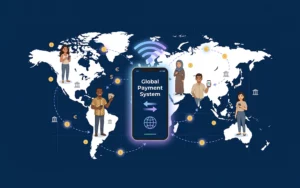



| Overview The effect of remittances on economic growth extends far beyond individual households. This overview examines how the $656 billion workers sent home in 2023 stabilised consumption, financed small businesses, and drove financial inclusion across developing economies. It covers transmission channels, regional evidence, case studies from major recipient countries, current challenges including high transfer costs, and practical steps employers and policymakers can take to maximise development impact while supporting workforce financial wellness. |
Every month, a construction supervisor in Dubai sends AED 1,200 to his family in Kerala; a logistics worker transfers money to fund his daughter’s education in Manila; a hospitality employee supports her parents’ medical expenses in Dhaka. For employers overseeing large teams in the UAE, these transfers are routine; payroll is processed, wages are sent, and workers help loved ones back home. What many employers don’t see is the cumulative weight of those individual decisions. The UAE sends over $45 billion in remittances annually, making it the third-largest remittance-sending country globally.
That money doesn’t disappear into household budgets. It stabilises economies, funds businesses, and builds the financial infrastructure that supports long-term growth in workers’ home countries. Understanding the effect of remittances on economic growth matters, not just for policymakers, but also for employers whose workforces are actively shaping development outcomes across South Asia, Southeast Asia, and beyond.
Global Remittance Landscape
Workers around the world sent $669 billion to low- and middle-income countries in 2023, representing a 3.8% increase from the previous year. That total is projected to reach $1031.45 billion in 2029. These are not marginal flows. Remittances now exceed both official development assistance and foreign direct investment for many developing economies, making them the largest external financing source those countries receive.
Five countries receive the majority of global remittance flows. India leads at $120 billion annually, followed by the Philippines at $39 billion and Pakistan at $27 billion.
The UAE’s role in this system is substantial. For a workforce of 500 employees, if half send home an average of AED 1,000 monthly, that represents AED 3 million annually moving through remittance channels. That is not incidental to your operations; that is a parallel financial system running alongside your payroll.
Transmission Channels Linking Remittances and Growth
The effect of remittances on economic growth operates through three main mechanisms: consumption smoothing, investment financing, and exchange-rate effects. Each channel works differently, but all connect individual worker decisions to national economic outcomes.
Consumption Smoothing
Remittances act as counter-cyclical income stabilisers. When economic downturns hit recipient countries, remittance flows increase, and workers send more home precisely when families need it most. This enables households to maintain spending levels during periods when local incomes fall. That sustained consumption directly supports GDP through consumer demand and has a documented multiplier effect on local economies.
For an employer, this means the money your worker sends home in October doesn’t just cover that month’s groceries. It keeps small shops open, maintains demand for local services, and prevents the kind of sharp consumption drops that deepen recessions.
Investment Financing
Remittance-receiving households often allocate portions of income to productive investments like small businesses, education, and housing, while showing higher entrepreneurship rates than non-receiving households. This channels funds into long-term growth beyond short-term consumption.
A logistics worker sending AED 1,500 monthly isn’t only funding immediate family needs. Over several years, those transfers accumulate. Families use the money to open a small shop, pay for vocational training, or finance a housing extension that generates rental income. These are micro-level investments, but they compound across millions of households into measurable economic expansion.
Exchange-Rate Effects
Large remittance inflows can appreciate real exchange rates, potentially reducing export competitiveness. This is the macroeconomic risk. When too much foreign currency enters an economy through remittances, the local currency strengthens, making exports more expensive for foreign buyers. The effect varies by country context and whether inflows are channelled into productive sectors versus pure consumption.
Not every remittance corridor faces this risk equally, but for employers in export-oriented sectors, understanding that your workers’ remittances can influence the exchange rates of their home countries adds a layer of complexity to workforce financial decisions.
Empirical Evidence Across Regions
A 10% increase in remittances as a share of GDP is associated with a 0.66% increase in GDP growth rates in recipient countries, based on panel data analysis across developing economies. The effects are strongest in countries with underdeveloped financial systems, where remittances fill credit market gaps that formal banks don’t serve.
| Did You Know? For a workforce of 1,000 employees, if 60% send home an average of AED 1,200 monthly, that represents AED 8.6 million annually flowing into workers’ home economies, enough to fund dozens of small enterprises or hundreds of households’ educational expenses. |
Regional variation matters. In South Asia and Sub-Saharan Africa, remittances show a stronger positive correlation with poverty reduction and household resilience than in Latin America or Eastern Europe, attributed to differences in how recipient households use the money and the characteristics of those households. For employers with South Asian workforces, particularly Indian, Pakistani, and Bangladeshi employees, this data is directly relevant. The money they send home has measurably higher development impact in those corridors than in others.
Case Studies: Philippines, India, and Bangladesh
In 2022, remittances made up about 8.9% of the Philippines’ GDP. The Philippine government has implemented diaspora-focused programmes, including reduced-cost government remittance services and diaspora bonds, to channel funds towards infrastructure development. That policy innovation reflects how seriously the Philippines treats remittances as economic infrastructure, not just household support.
India received $125 billion in remittances in 2023, representing approximately 3% of GDP. Digital platforms and fintech innovations have reduced average transfer costs from 6% to below 3% on major corridors over the past five years. For employers with large Indian workforces, this cost reduction is significant. A worker sending AED 1,000 monthly now keeps AED 30–40 more per transfer than they did five years ago, which compounds to AED 360–480 annually per worker.
Bangladesh is one of the world’s top remittance recipients, with inflows reaching about $27 billion in 2024. Remittances have accounted for a growing share of GDP in recent years, reaching 5.26 per cent in 2023, up from 4.67 per cent in 2022, highlighting their increasing macroeconomic importance. The government has actively incentivised formal remittance channels through cash bonuses and expanded mobile financial services to reach rural populations. These measures have helped shift flows away from informal networks and strengthened financial inclusion across the country.
Challenges and Pitfalls
The global average cost of sending $200 in remittances was 6.26% in Q4 2024, well above the UN target of 3%, with informal channels like hand-carried cash and unregulated networks driving higher fees, opacity, and security risks. For a worker sending AED 1,000 monthly, that’s AED 62 lost per transfer or AED 744 annually, enough to cover a child’s school fees. Formal digital options cut these costs, boost transparency, and enhance financial inclusion for workers and families.
Yet remittance dependency poses pitfalls: overly reliant countries face labour market distortions from reduced local participation, while households grow vulnerable to downturns in sending nations. Remittances stabilise short-term but must be channelled into productive uses to avoid long-term traps.
Remittances and Financial Inclusion
Digital remittance services linked to mobile wallets have increased financial account ownership among remittance recipients. This creates pathways to savings, credit, and insurance products. A worker’s family receiving money through a mobile wallet doesn’t just get the cash; they gain access to a financial account, transaction history, and the ability to save digitally.
The UAE Central Bank’s licensing framework for digital payment services and stored value facilities has enabled regulated fintech platforms to offer Shariah-compliant, cost-effective remittance solutions integrated with payroll systems. This supports both compliance and financial inclusion objectives for employers. For HR teams, this means payroll-linked remittance isn’t just a worker benefit; it is a compliance-aligned, ESG-measurable infrastructure decision.
| What You Can Do Review your workforce remittance patterns through anonymous surveys. Identify what percentage of employees send money home, to which countries, and at what cost. Use that data to evaluate whether employer-facilitated digital remittance channels could reduce worker costs while strengthening your financial wellness and ESG programmes. |
What Employers Can Do to Support Workers’ Remittances
Employer-facilitated remittance programmes integrated with payroll systems often deliver meaningful cost savings for workers compared to traditional retail channels. These initiatives also improve financial wellness and reduce payroll advance requests, as shown in GCC and Southeast Asian pilot programmes. For a workforce of 500 employees sending an average of AED 1,000 monthly, a 25% cost reduction saves workers AED 125,000 annually. This is money that stays with employees rather than disappearing into transfer fees.
- Partner with regulated fintech providers offering payroll-linked remittance services.
- Offer financial literacy programmes explaining transfer cost structures and digital channel benefits.
- Track worker financial wellness KPIs, including:
- Remittance cost as a percentage of salary.
- Use of employer-facilitated channels.
- Payroll advance frequency.
- Use metrics to measure programme impact and refine support offerings
Key Takeaways
The effect of remittances on economic growth operates through consumption stabilisation, investment financing, and financial system development. Workers in the UAE are not just supporting individual families; they are funding small businesses, educational infrastructure, and economic resilience across South Asia, Southeast Asia, and beyond.
True financial inclusion extends beyond products to infrastructure. Employers who understand remittances as economic development channels, not just worker transactions, position their workforce programmes within a broader development ecosystem, one where operational decisions support both employee welfare and sustainable growth in workers’ home countries. Solutions like myZoi’s digital wallet demonstrate how payroll-integrated remittance services align compliance, cost reduction, and inclusion outcomes for employers and workers alike.
Frequently Asked Questions
How do remittances contribute to economic growth?
Remittances stabilise household spending during economic downturns, fund small businesses and education, and boost financial inclusion. They contribute to long-term economic growth beyond short-term consumption.
What is the current global scale of remittances?
Workers sent $656 billion to low/middle-income countries in 2023, topping FDI and aid.
Why do remittance costs matter for economic impact?
High remittance costs reduce the money reaching families, limiting consumption, savings, and investment in recipient economies. Lower costs boost these inflows and promote financial inclusion by encouraging formal channels over risky informal ones.
What can employers do to support workers’ remittances?
Link payroll to regulated fintech platforms, offer financial literacy sessions on transfer costs, partner with licensed providers, and track financial wellness metrics. These steps deliver meaningful cost savings versus traditional channels while boosting worker satisfaction.
How do remittances relate to financial inclusion?
Digital remittance channels significantly increase recipient access to bank accounts and mobile wallets, enabling savings, credit, and other financial services. This builds long-term financial resilience beyond immediate cash transfers.
Which countries receive the most remittances?
India leads with $120 billion annually, followed by the Philippines at $39 billion and Pakistan at $27 billion.
What are the risks of remittance dependency?
Exchange rate appreciation hurts exports; it may distort local labour markets or create household reliance. The benefits outweigh when funds fuel productive use.